
Guide / Safety · operation · maintenance
Safe pallet wrapper operation — rules and checklist
Prepare the workstation. Control the working area. Respond to faults.
A pallet wrapper reduces the effort involved in wrapping pallets by hand, but it still requires well-organised working procedures. Find out what to check before starting, when changing film and during machine maintenance.
Author: Józef Woliński · Production Director · POLPACK ZEUS
Published:
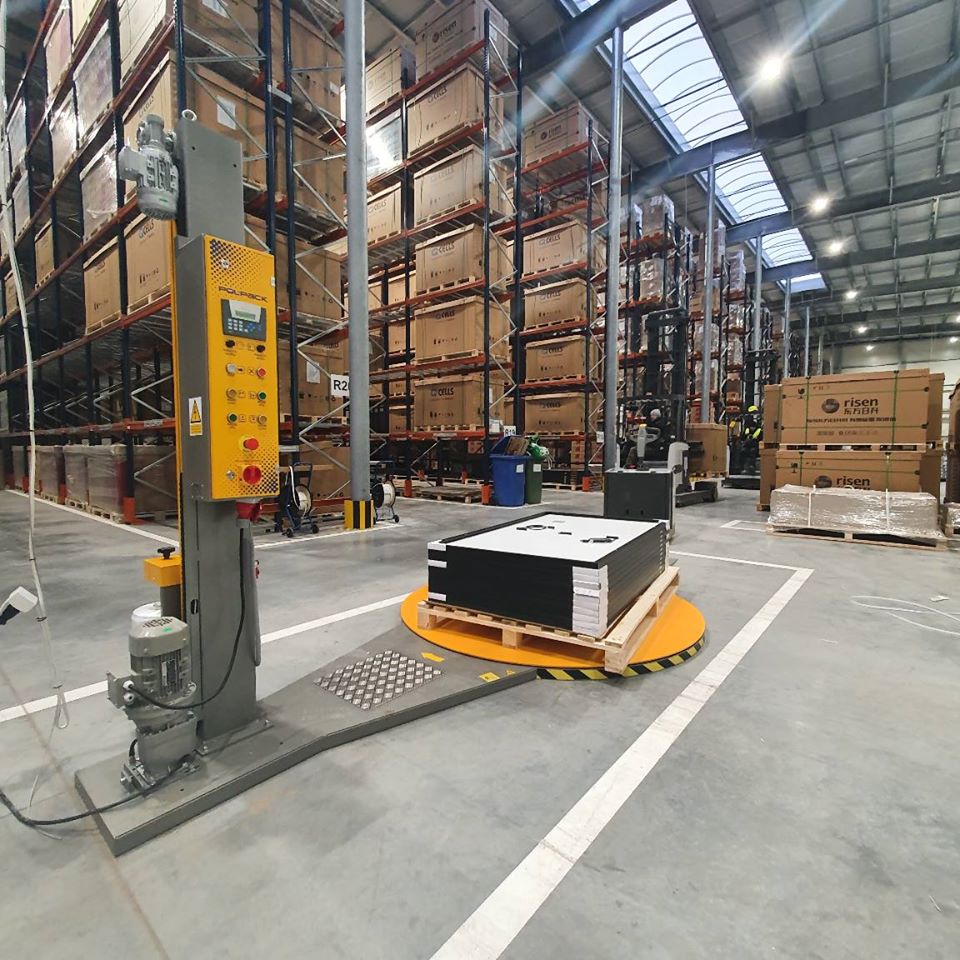
How do you operate a pallet wrapper safely?
Before startingCheck the load, workstation and required safeguards.
During the cycleStay outside the danger zone. Do not adjust the film or load while the machine is moving.
Before interventionStop the machine and apply the safeguards required for the task.
Use these principles together with the instructions for the specific wrapper, the workstation risk assessment and your site procedures. Safeguarding depends on the model, its equipment and how it is integrated with other machinery.
Identify the danger zones
Where do hazards arise during pallet wrapping?
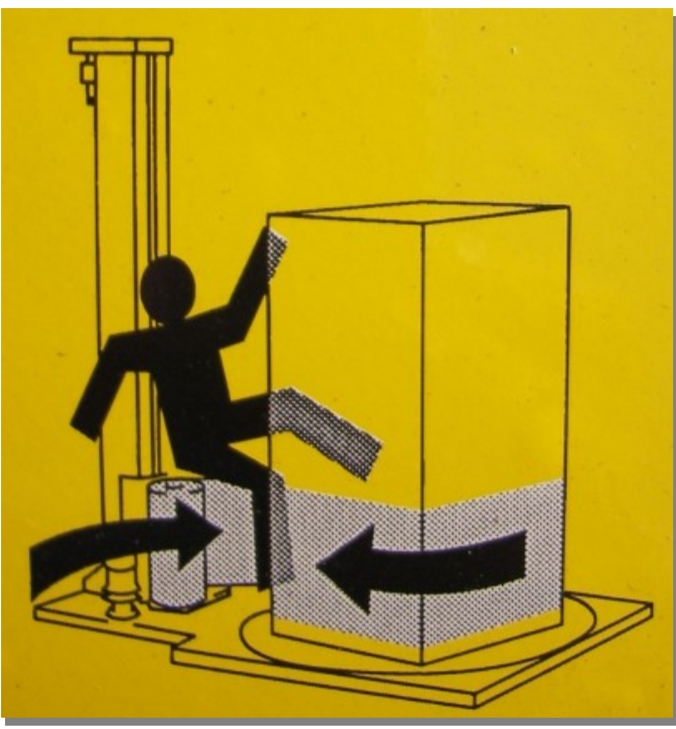
Both machine components and the rotating load can present hazards. Pay particular attention to the space between the pallet and mast, film carriage movement, guide rollers, the top platen and conveyors.
Impact and crushing
Protruding goods, a rotating pallet or a descending component may enter the space occupied by the operator. Consider the full movement envelope, including that of non-standard loads.
Drawing-in and entanglement
Keep hands, loose clothing and hair away from moving parts. Do not thread film through a running roller system. Select workwear and protective equipment according to the instructions and risk assessment.
Unstable loads
A damaged pallet, leaning stack or inadequate restraint may allow goods to shift or fall. Do not try to support the load by hand during the cycle.
Unexpected movement
A pause in movement does not mean it is safe to enter the machine. A stopped line may be waiting for its next control signal; entry requires the specified procedure.

Operator checks
Pallet wrapper pre-start checklist
Before starting work, check the following items within the operator's authorised responsibilities. If you find damage or have doubts, do not start the machine and report the problem.
- Operator preparation. You know the instructions, stopping methods, fault-reporting procedure and the tasks you are authorised to carry out.
- Pallet and goods. The pallet is undamaged and the load is stable and correctly positioned or secured.
- Permitted operating limits. Weight, height and movement envelope are within the limits of this machine configuration.
- Clear working area. No people, trucks, tools or film waste are within the movement area. Walkways and access to stop controls are clear.
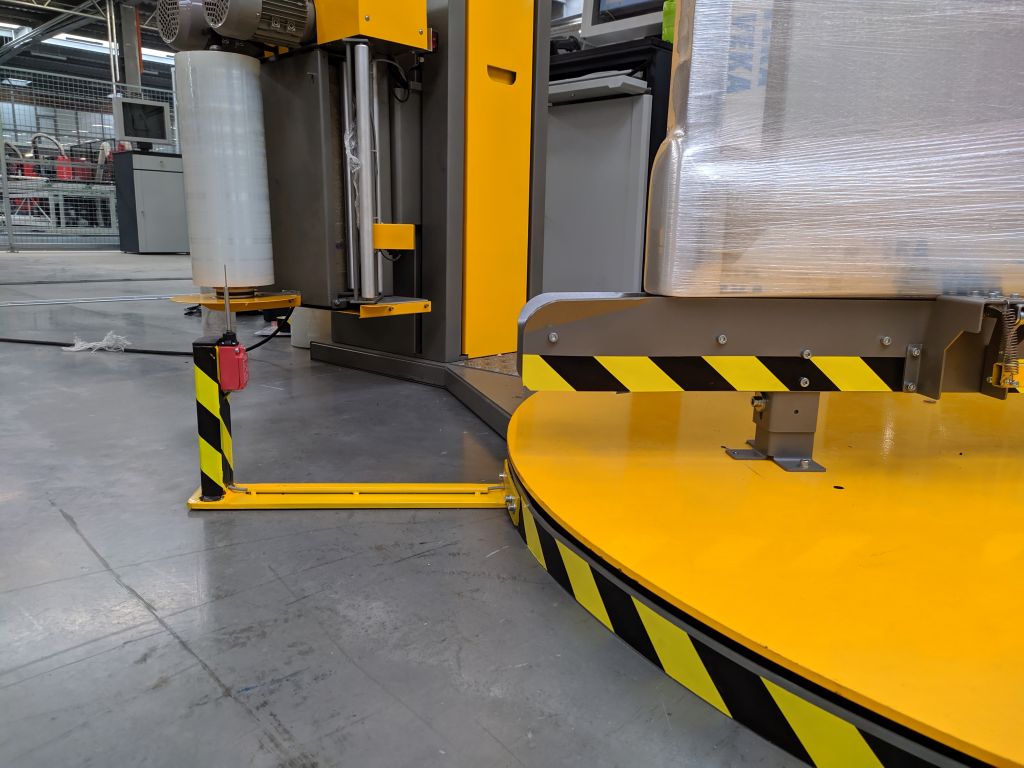
- Guards and protective devices. They are in place with no visible damage. Required functional checks have been completed according to the instructions, without bypassing safeguards.
- Film and programme. The roll is correctly secured, the film is threaded according to the instructions and the programme suits the load.
- Ready to start. The operator is in the designated position and has checked that starting will not endanger anyone nearby.
For practical settings, also see our guide to operating semi-automatic pallet wrappers.
Workstation and installation
Safety starts with the workstation
Install the wrapper on a floor with the required load capacity, levelness and stability. The manufacturer specifies the installation method, any anchoring requirements and connections.
Transport and positioning
Have appropriately trained people move the machine. Use the designated lifting points and equipment suited to its weight, centre of gravity and transport conditions. Do not lift it by arbitrary structural components.
Power supply and cables
The electrical installation must meet the machine's requirements. Do not route cables through traffic lanes or places where they could be crushed or cause a trip. Connections and alterations must be carried out by appropriately qualified personnel.
Separating traffic
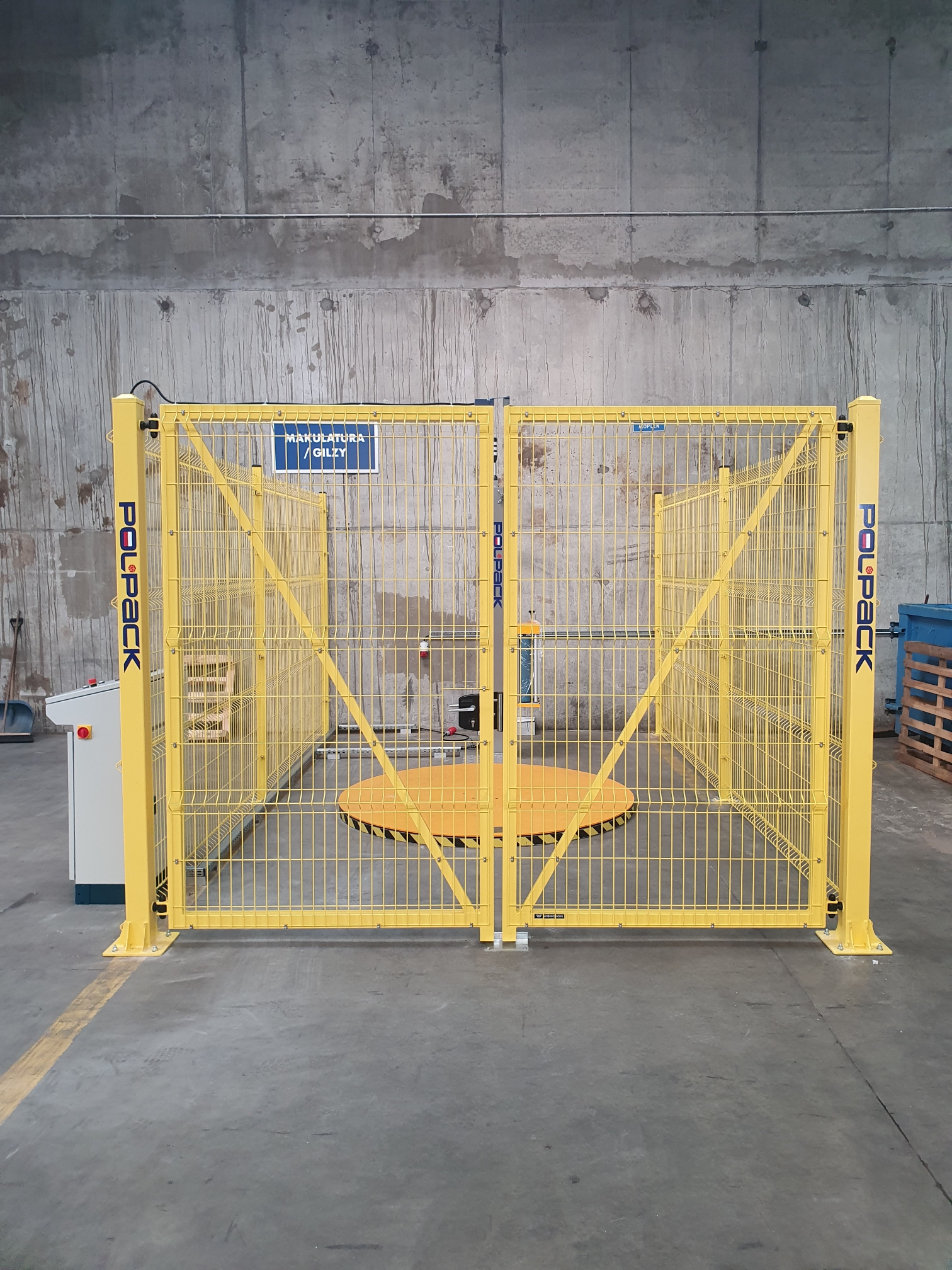
Plan truck access, pallet staging and pedestrian routes. Floor markings help organise the area, but do not replace guards or protective devices required for the workstation.
Non-standard loads
A large pallet, window or tall load requires an appropriate configuration. Assess the full movement envelope and means of stabilisation. A top platen or fixture has a defined range of applications; it does not eliminate every hazard.
Different machines, different working areas
Turntable wrapper, mobile robot and automatic line
| Machine type | Organising safe operation |
|---|---|
| Turntable wrapper | Allow for rotation of the entire load, the space beside the mast and film carriage movement. Do not stand on the turntable or enter the movement area during a cycle. |
| Mobile wrapping robot | Keep the robot's route around the pallet clear and provide the space required by its instructions. Do not cross its travel path; obstacle-detection devices do not replace proper workstation organisation. |
| Automatic line | Consider both the wrapper and connected conveyors. Use the designated access points and entry procedures. Do not enter through material-transfer openings or bypass interlocks, light curtains or other safeguards. |


Interrupted cycle
What should you do if the film breaks during wrapping?
Do not grab or adjust the film while the machine is running. Do not reach between rollers or between the pallet and mast.
- Stop the cycle as specified in the instructions. Use the emergency stop if there is danger.
- Wait for all movement to stop. Before entering the area or clearing a jam, follow the required procedure to prevent unexpected start-up.
- Address the cause only within the operator's authorised tasks. If it requires removing guards, repairs or intervention in machine systems, contact service.
- Thread the film according to the instructions. Before restarting, check the load, restore safeguards and make sure the area is clear.
Repeated film breaks may require a review of the material and settings. See: stretch film selection, wrapper settings and consumption optimisation.
Stopping, energy and maintenance
An emergency stop does not replace energy isolation
The emergency-stop button is used to stop the machine in a dangerous situation. Pressing it does not confirm that the machine is isolated from every energy source or ready for maintenance.
Before work requiring isolation, a competent person must stop the equipment, isolate the relevant energy sources and secure them against reconnection in accordance with the instructions and the site's lockout/tagout (LOTO) procedure. Stored energy, such as compressed air, and components that could descend must also be considered. Verify the safe condition before starting the task.
After the work, check that the machine is complete, guards are in place and the area is clear. Restore power and restart according to the established procedure. Resetting an emergency stop is not itself a command to start work.


How should pallet wrapper inspections be scheduled?
Base the schedule on the instructions, workload and site conditions. There is no single inspection interval suitable for all pallet wrappers. Check drives, guides, electrical components and protective devices, and carry out lubrication, as specified for the particular model.
Keep the workstation tidy, removing waste only when the machine is in a safe condition. Record faults and completed tasks. If a safeguard is damaged or its operation is uncertain, stop using the machine until the issue has been resolved.
POLPACK ZEUS examples
Solutions in real installations
See how the load and process affect workstation configuration. Each installation requires its own assessment of working conditions.
Frequently asked questions
Pallet wrapper safety — questions and answers
Does every pallet wrapper need perimeter guarding?
Required protective measures depend on the design, instructions, configuration and workstation risk assessment. The label 'semi-automatic' or 'automatic' alone cannot determine them. Do not remove safeguards specified for your machine.
How far should you stay from a running wrapper?
Observe the zone defined for the specific machine and workstation. It depends, among other things, on the movement envelope of the machine and load. There is no single distance in metres that applies to every wrapper.
Can you wrap a pallet that overhangs the turntable?
Only if the configuration permits those dimensions and that positioning method. Check weight, support, stability and the full rotational envelope. Simply fitting the pallet onto the turntable does not confirm that the load is permitted.
Can repairs begin after pressing the emergency stop?
No. Repairs require preparation according to the instructions and procedure for that task, including the required energy isolation. An emergency stop does not replace this preparation.
Who should carry out inspections and repairs?
People with the appropriate knowledge, training and qualifications required for the work. Operators carry out only the tasks assigned to them by the instructions and site procedures.
Further reading
Selecting and operating a pallet wrapper
POLPACK ZEUS service
Have a concern about your pallet wrapper?
Have the model, serial number and a description of the problem ready. Contact us to agree the scope of diagnostics or an inspection. Take photographs only from a safe position.
Explore our service support ↗