
Packaging bread, biscuits and cakes: machinery, films and takeaway packaging
Packaging solutions for bakeries and confectioners: shrink wrapping, flow wrapping, MAP sandwiches, takeaway food packaging and pallet wrapping.
Packaging for the way you make and sell bakery products
Good packaging protects the product, shows its quality and suits the way it is sold. A bakery may need a wrapping machine, paper bread bags for counter sales and cake boxes for takeaway orders at the same time. POLPACK ZEUS brings together machines, films and ready-made foodservice packaging.
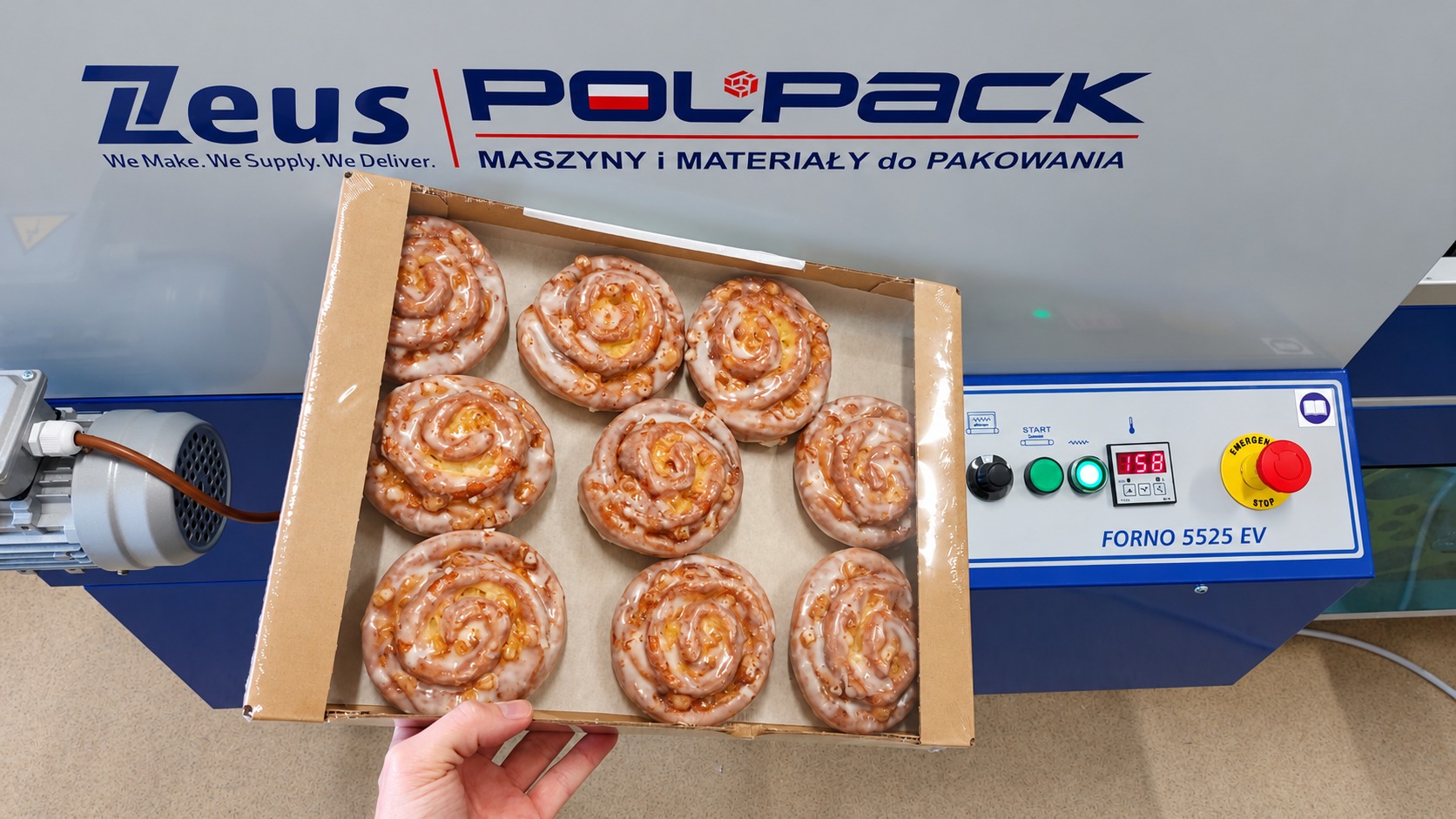
Bread and rolls have different needs from cartons of biscuits or wafers, and from a sandwich and coffee taken away from a bakery. Shrink wrapping cartons of biscuits is an important application for our machines: the film encloses the carton and its contents, providing a finished pack with good product presentation.
Start with the product and sales channel
For bread, rolls and multipacks, compare shrink wrapping and flow wrapping; paper bags are an option for counter service. Check product temperature, crust, dimensions and display requirements. For individual biscuits and muffins, compare individual or tray-based flow wrapping with boxes for assortments. Product fragility and decorations influence the support required.
For cakes and biscuits in cartons, the carton provides the primary structure and an outer shrink wrap may complete the pack. Check carton rigidity, product height and appearance after shrinking. For sandwiches, consider ready-made food packaging or a suitable flow wrapper. Filling, refrigeration and distribution conditions are important. For takeaway coffee and pastries, select cups, matching lids, boxes, carriers and bags as a coordinated set.
Takeaway packaging for bakeries and cafés
A bakery menu often includes sandwiches, breakfast items, desserts and coffee. Choosing packaging for the whole menu helps staff pack orders efficiently and makes them easier for customers to carry.
Our foodservice range includes paper bags for bread, rolls and small baked goods; cake cartons; biscuit and confectionery boxes; sandwich and snack packs, including windowed options; takeaway dessert containers; paper coffee cups, matching lids, carriers and bags.
Selection considers dimensions, exposure to grease or moisture, closure and product visibility. Printing options, order quantities and lead times are established for the particular film, box or cup.
Food packaging (Polish)Takeaway packaging (Polish)Coffee cups (Polish)
Shrink wrapping bread and cartons of biscuits
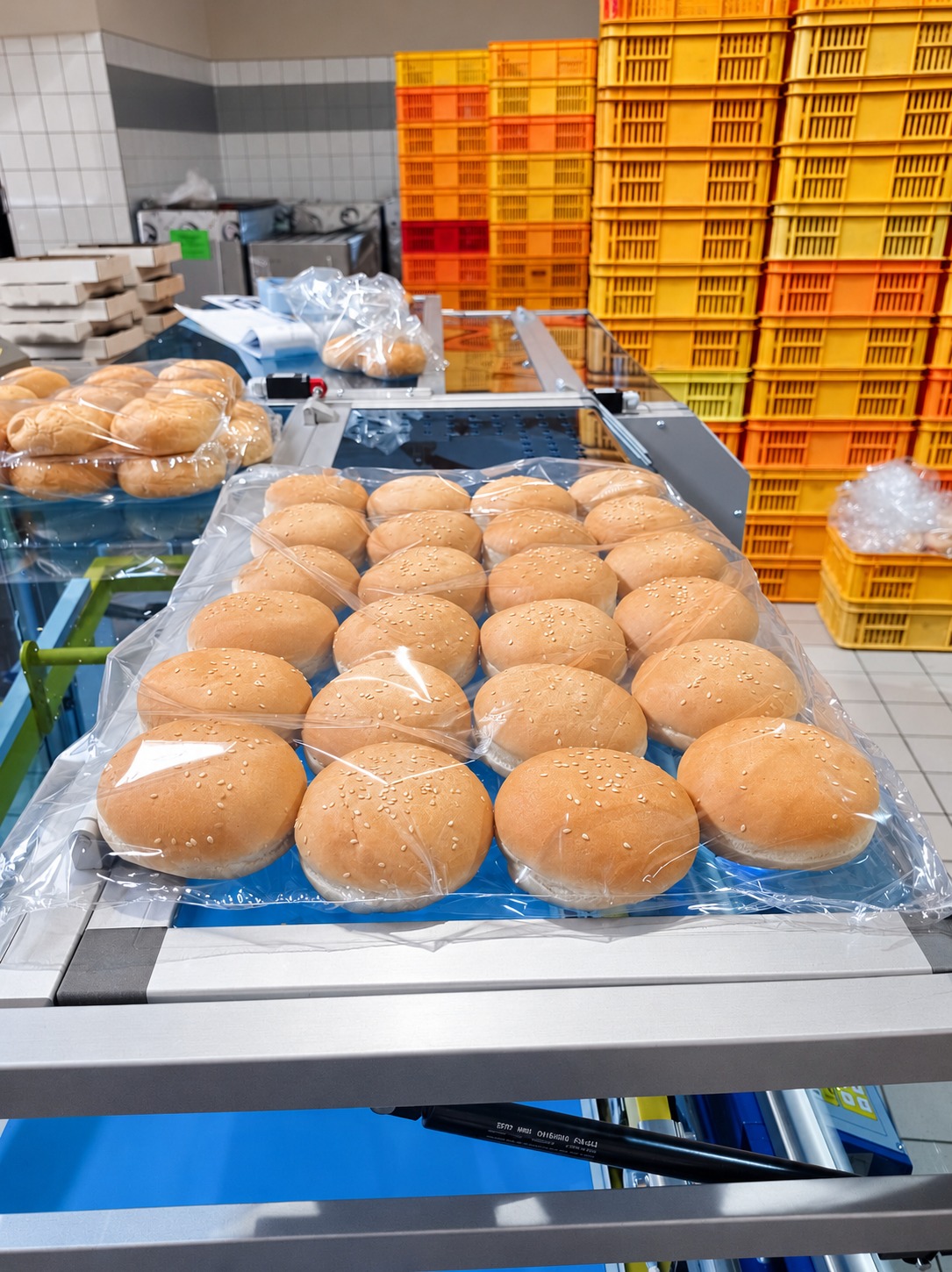
Shrink film fits around a product or pack when heated. It can be used for bread, multipacks of rolls and the outer wrapping of cartons containing biscuits. A tray or carton supports delicate goods while the film encloses the pack.
DIBIPACK chamber machines combine sealing and shrinking under one hood. The operator places the product in film and closes the hood. This is a compact, flexible option for changing products. Indicative figures in our existing guide are 400–600 loaves or 150–200 biscuit cartons per hour; actual output depends on dimensions, shrink cycle and operator workflow.
ESPERT semi-automatic machines separate sealing from shrinking in a tunnel. The operator can prepare the next product while the previous pack shrinks. Our guide gives an indicative 700–900 packs per hour, depending on product and settings.
For larger repeat runs, compare automatic machines such as MECPACK, used for applications including biscuit cartons. The previously described application reaches up to 2,000 packs per hour; model selection and integration must account for dimensions and product feeding. Automation reduces the manual operations needed for each pack.
In our applications, bread sliced vertically is often shrink wrapped, while bread sliced horizontally is more often flow wrapped. The final choice also depends on loaf shape, desired presentation and production output.
Flow wrapping: individual biscuits to multipacks of rolls
A horizontal flow wrapper forms a pack from a film reel, with a longitudinal seal and cross seals. Applications include biscuits, muffins, rolls, sandwiches and products supported on trays. Film can be clear or printed.
Horizontal flow wrapping is a useful direction for regular production runs and growing output. The existing article cites 40–200 packs per minute across different solutions; this is not a guaranteed speed for every bakery product. We select the machine around pack length, film, product feeding and the required output.
Top-film feeding is commonly considered for regular shapes and products on trays. Bottom-film feeding can suit less regular products or items that are difficult to convey with pushers, placing the product onto the film. For fragile biscuits and decorated goods, feeding, support and seal position matter. LAFERPACK solutions can be considered for more complex individual and grouped packaging projects.
MAP sandwiches for catering and distribution
We increasingly supply flow wrappers for sandwiches packed in a modified atmosphere (MAP). A suitable gas mixture, barrier film and properly sealed pack can help extend shelf life while maintaining the required refrigeration. This is particularly relevant to catering and sandwich production supplying multiple outlets.
The shelf life must be validated for the particular product and process. Gas dosing alone does not establish it: ingredients, hygiene, film barrier properties, seals and the cold chain all matter.
UNIQUE: a versatile entry into flow wrapping
UNIQUE is a compact, semi-automatic option for bakeries and confectioners starting with flow wrapping. It suits a varied range and shorter runs where flexibility and a lower initial investment are priorities. Its operating rhythm follows the operator. We compare it with horizontal automatic machines when production volumes and pack presentation call for a different configuration.
Film selection is part of machine selection
For direct food contact, the material needs documentation appropriate to its intended use. We select it around the product, sealing process, pack appearance and storage conditions.
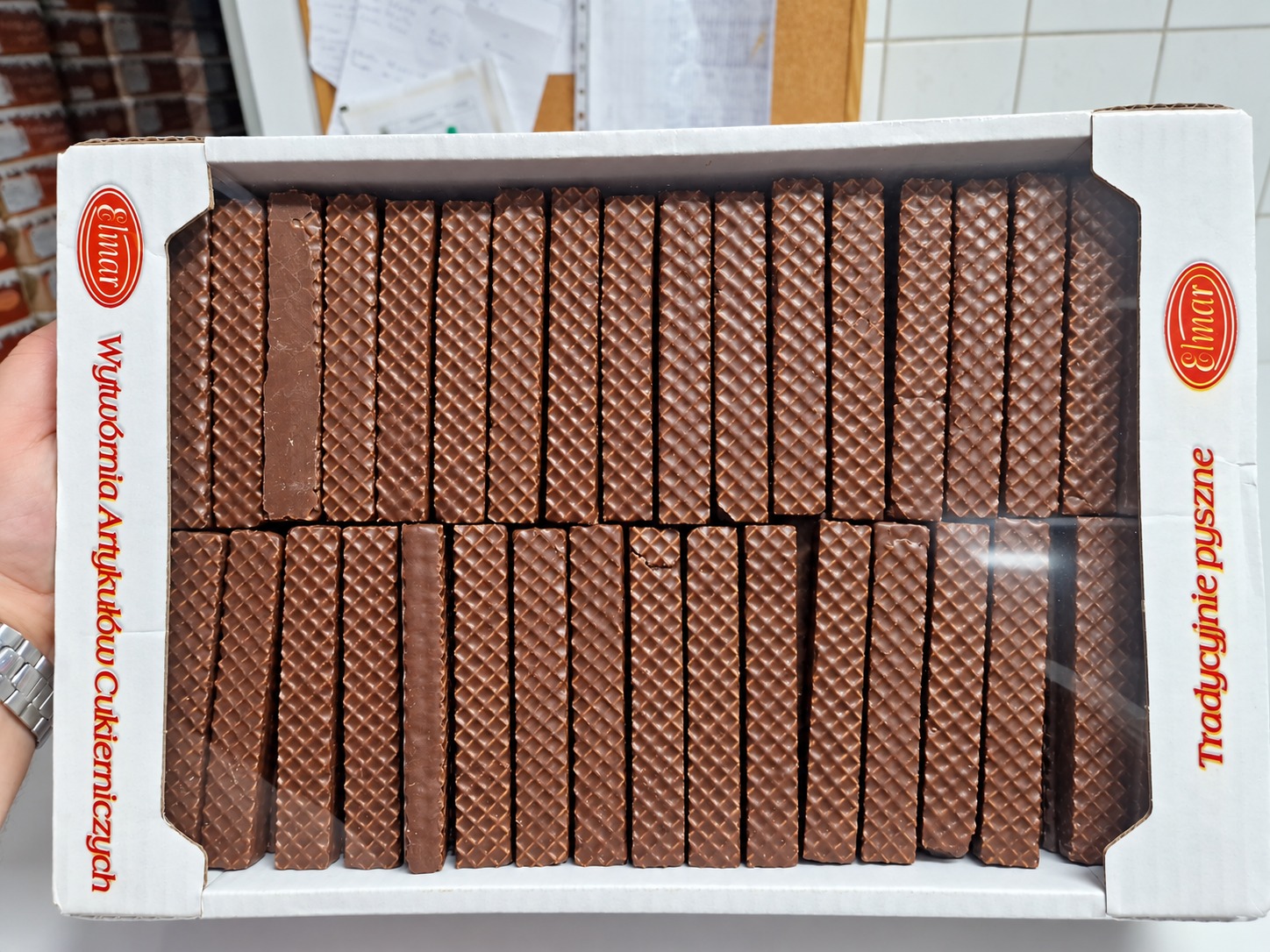
DECOTERM PVC centre-folded shrink film is used on chamber and semi-automatic machines. Previous applications in the guide use 15 or 18 µm for bread and 18 or 25 µm for biscuit cartons. These are starting points for trials, with dimensions and carton edges taken into account.
POF films, including DECOLINE, offer different grades for different machines and production rates. Seal settings, temperature, airflow and tunnel dwell time affect the result. We also compare consumption per pack and downtime.
PP films and laminates are used for flow wrapping. Clear film displays the product and printed film supports branding. MAP requires an appropriate barrier material, reliable seals and suitable machine equipment.
Five details that influence the finished pack
Product temperature: establish cooling and the right moment to pack. Enclosing a warm, moist product can cause condensation. Fragility and decoration: use a tray, board or carton where support is needed, leaving clearance above icing and cream.
Sales method: a bag handed over at the counter and a distribution pack serve different purposes. Repeatability: assess product changeovers, reel replenishment and preparation time as well as nominal machine speed. Identification: plan space for labels and variable data, with marking equipment selected for the machine and pack.
Wrapping pallets of biscuit and bakery cartons
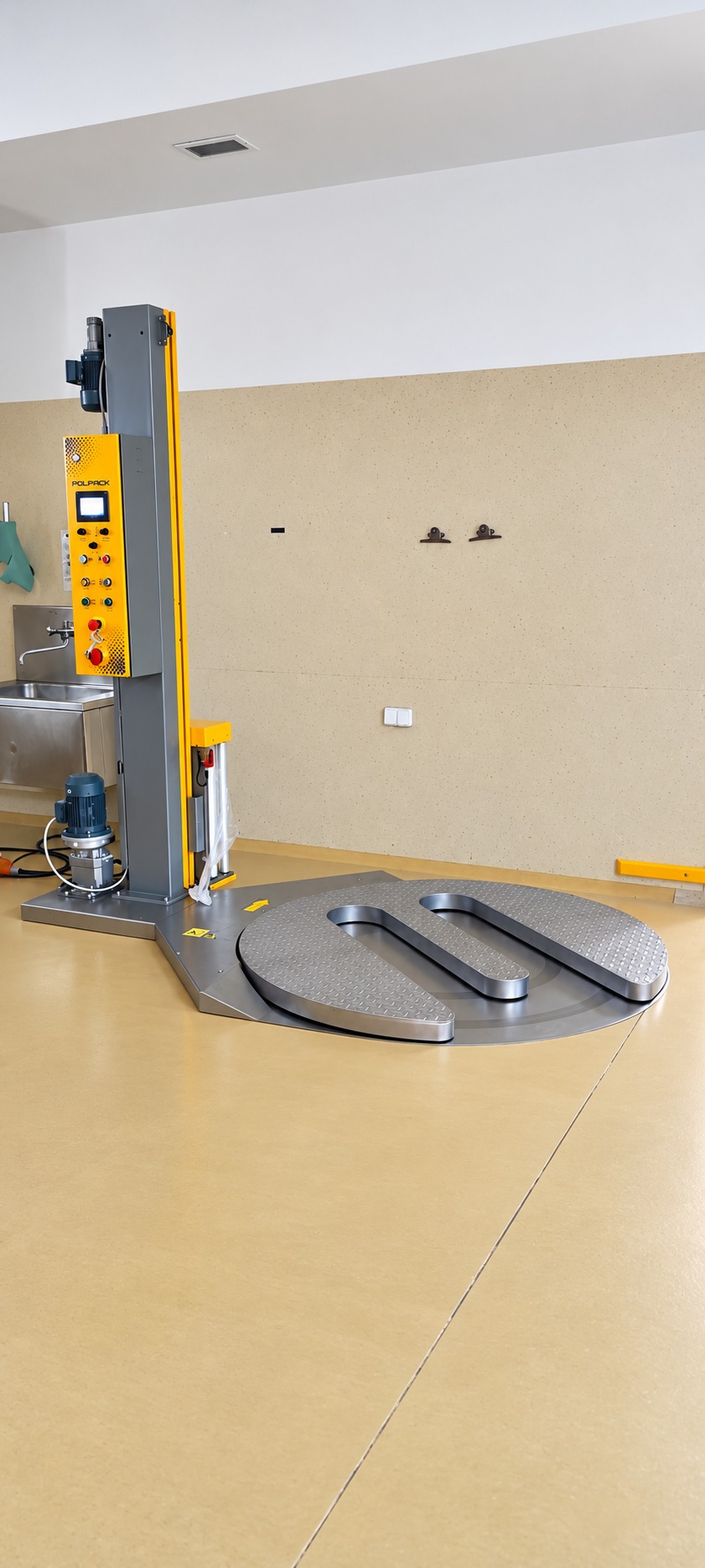
The individual pack is only the first stage. Cartons of biscuits, wafers and baked goods also need preparation for storage and transport. A pallet wrapper helps secure the load to the pallet and reduce movement during handling.
With our own Wrapper machines, the wrapping programme and film tension are selected for load height, weight and rigidity. Light biscuit cartons need stabilising without excessive compression. Trials on the completed pallet help establish the number of wraps and film usage.
The Wrapper SA photograph shows a stainless-steel base and a turntable with a cut-out. It is also relevant to produce packing projects. The scope of stainless-steel construction is selected for the working environment and cleaning method.
Food-contact materials, PPWR and showroom trials
For food applications, we offer films and packaging intended for direct food contact, meeting the applicable PPWR requirements relevant to them. The chosen material must suit the type of food, temperature and contact duration, as set out in its documentation.
Bring your products to the POLPACK ZEUS showroom. By prior arrangement and subject to suitable equipment being available, we can compare appearance, seals, film consumption and ease of handling. Prepare the smallest and largest products, photographs, required hourly output, batch lengths and details of counter sales or distribution. Machine footprint, feeding and discharge should also be considered. Leasing can be discussed as part of the investment.
Frequently asked questions
Can one machine wrap bread and biscuit cartons? Yes, if both fit its working range and suitable film and settings are available; different dimensions may require changeovers and a reel change. Flow wrap or shrink wrap for biscuits? Compare flow wrapping for regular runs and individual or tray-supported products, and shrink wrapping for cartons and varied formats.
Can I buy packaging without a machine? Yes: the foodservice range includes bread bags, cake and biscuit boxes, sandwich packaging and coffee cups. Can it be printed? Options depend on the selected material, design, quantity and lead time. Does wrapping guarantee a longer shelf life? No: recipe, hygiene, cooling, packaging and storage conditions must be assessed for the particular product.
Explore related guides
Fruit and vegetable packaging: machines, films and complete packing linesShrink wrapping: how to choose the machine, film and processPVC, POF or PE? Choosing shrink film and reducing packaging costsEgg packaging: from trays and shrink film to secured pallets
Try packaging with your own product
Discuss your product, output and packaging requirements with our team and arrange suitable trials.