
Shrink wrapping: how to choose the machine, film and process
A practical guide to chamber sealers, L-sealers with tunnels and automatic side sealers, including sealing technology, packaging costs and product trials.
A complete process, selected around your product
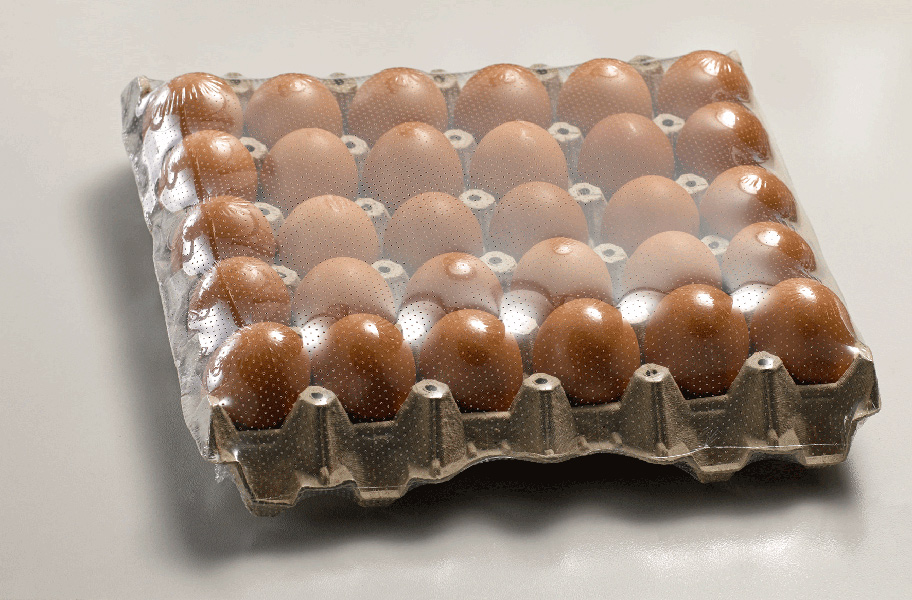
Shrink wrapping encloses a product in film, seals it and uses heat to shrink the film around the contents. It can produce a neat individual pack, protect a carton or hold several items together. The result depends on the machine, film and product working together.
POLPACK ZEUS selects machinery and materials for applications ranging from bakery cartons and produce to cosmetics, printed products and long industrial components. We consider the product dimensions, heat sensitivity, required appearance and production output before choosing equipment.
What happens during shrink wrapping?
First the product is placed in film, commonly supplied as centre-folded film. The film is sealed and cut to form a pack. Heated air then shrinks it under a hood or in a separate tunnel. Finally the pack leaves the heated area and is allowed to stabilise before further handling.
The airflow, temperature, dwell time, film perforation and conveying speed work together. More heat is not a substitute for correct material selection or proper air circulation. Some applications require a loose or fitted bag without shrinking; these use film and machinery configured for that purpose.
Choose equipment for the production task
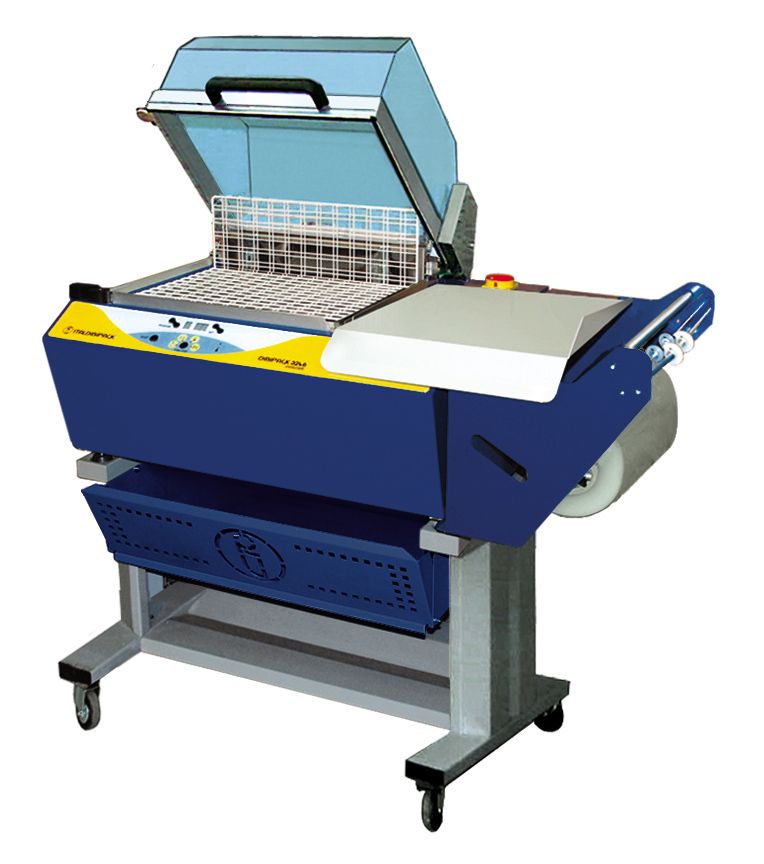
DIBIPACK chamber machines combine sealing and shrinking under a hood. They provide a compact manually operated workstation and can suit changing products, shorter runs and a lower initial investment.
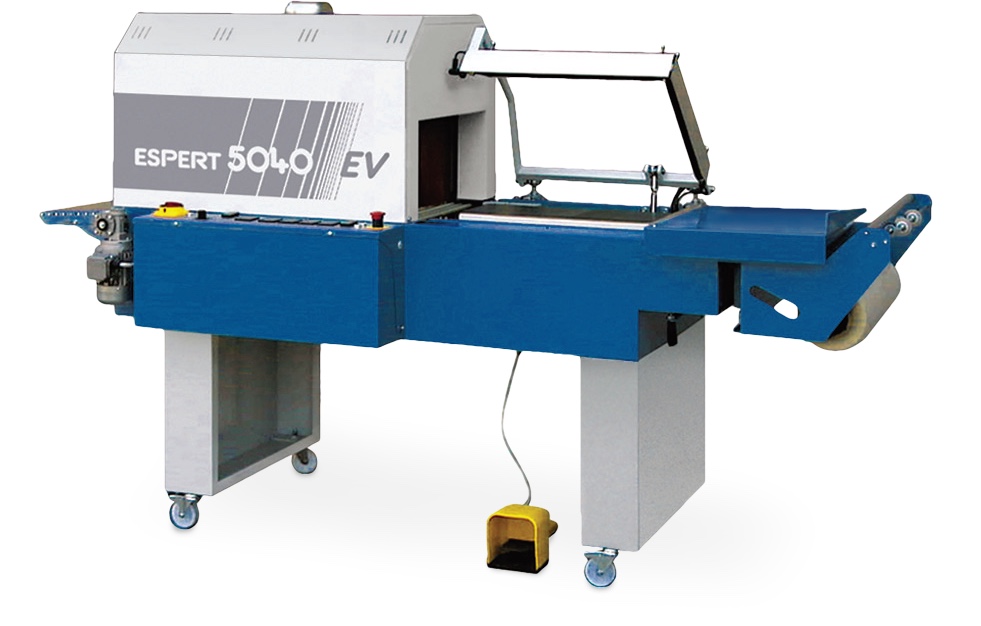
ESPERT semi-automatic L-sealers with tunnels separate sealing from shrinking. After sealing, the conveyor takes the product into the tunnel while the operator prepares another pack. This supports a smoother sequence of repeated cycles.
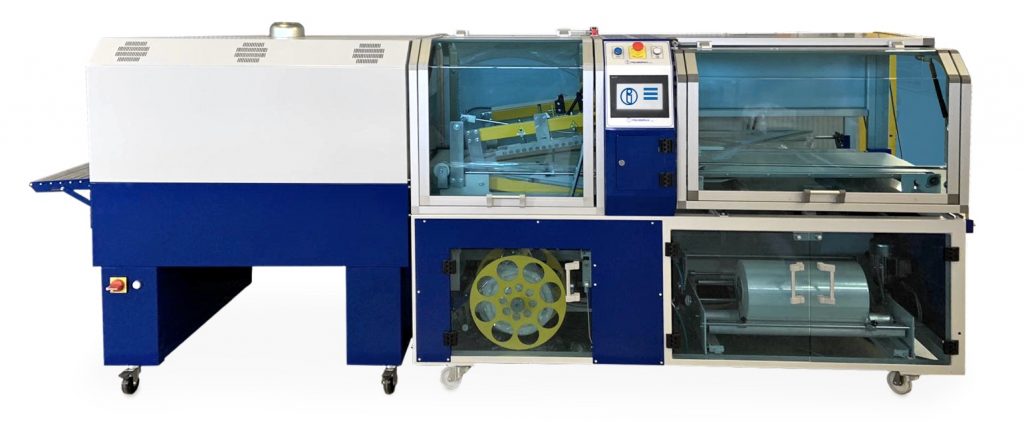
Automatic L-sealers such as MECPACK detect the product, make the seal and pass the pack downstream. They suit regular batches. The sealing frame determines the available format, taking account of product height and the film allowance as well as length and width.
Chamber machines (Polish)Sealer and tunnel systems (Polish)



Side sealing and long products
Continuous side sealing does not impose the fixed product-length constraint associated with an L-sealing frame. It can be selected for aluminium profiles, skirting boards and other components two, three, four metres long or longer. Exceeding three metres is not itself a technological barrier.
The machine, conveying and tunnel are configured for the product and required output. Long-product applications are also compared in metres per minute, rather than only packs per minute. For example, Hugo Beck FLEXO configurations can be considered for this kind of project.
In suitable travelling cross-seal configurations, the cross-sealing unit moves with the product, allowing transport to continue during sealing. Hugo Beck SERVO X solutions illustrate this approach. Stable feeding, pack spacing and downstream handling remain important to line performance.
Impulse sealing versus constant-temperature sealing knives
The chamber machines and semi-automatic L-sealers with tunnels discussed here use impulse sealing with a resistance strip. The strip heats during the sealing cycle. In the chamber machine, shrinking takes place under the hood; in the semi-automatic arrangement it takes place in a separate tunnel.
The automatic sealers discussed here use constant-temperature sealing knives. Controlled knife temperature and repeatable cycles improve process control and help produce consistent seals. They can also allow the use of suitably selected thinner film, reducing material consumption where the required pack performance is maintained.
A tunnel is responsible for shrinking. It does not determine the sealing technology: a sealer with a tunnel does not automatically have constant-temperature knives. The material, product and actual running conditions determine the minimum workable film thickness.
Overlap and electrostatic sealing for presentation-led packs
In selected configurations, the film can surround the product with a longitudinal overlap held by an electrostatic system. Such arrangements can be considered for cosmetics, boxed chocolates and other products where presentation is important. DCL-B is among the films we select for appropriate electrostatic sealing applications.
Film, reel format and perforation
POF and PVC are primarily considered for attractive individual packs and multipacks, while PE is often used for grouped and transport packaging. Detailed differences in appearance, yield and material cost are covered in our separate PVC, POF and PE guide.
Flat film and centre-folded film must match the machine design. Perforation allows air to escape during shrinking; its type and pattern depend on the product and process. A perforated pack should not be described as a hermetic moisture barrier.
PP films and laminates for flow wrappers are a separate topic: they usually form a bag without a shrink stage. Not every heat-sealable film is a shrink film. For food applications, we offer materials intended for direct food contact and meeting the applicable PPWR requirements relevant to them, selected according to the material documentation and contact conditions.


Compare the cost of the finished pack
The price per kilogram of film is only one component. Compare film used per product, side trim, operator time, energy, changeovers and the number of packs that need reworking. A useful model is: packaging cost = material + labour + energy + allocated changeover, downtime and rework costs.
Thinner film is useful when it provides the required protection and runs reliably. A shorter bag or a better-matched reel width can also reduce consumption. Assess the finished pack at the intended production rate rather than comparing reel prices alone.
What to check when the result is not right
Splitting seals: check the film grade, sealing settings, cleanliness of the sealing elements and film tension. Excess film or uneven shrinking: check reel width, bag length, perforation and airflow.
Deformed cartons: review shrink force, film thickness and formulation, tunnel settings and carton rigidity. Long product changeovers: review adjustment range, stored programmes, film guidance and feeding arrangements. Temperature is only one of the variables.
From one workstation to an automatic line
Automation can be developed in stages: sealing, product feeders, conveyors, grouping into multipacks, labelling and discharge. Printed products may need dedicated feeders; long components need suitable support; stacks need conveying that maintains their position.
Plan downstream cartoning and pallet wrapping too. The complete flow should match actual production, not just the maximum speed of a single machine.
Test your own product in the POLPACK ZEUS showroom
An agreed trial lets you see the finished pack and compare films on your own products. We assess seals, appearance, film usage and handling. Please arrange a date and confirm the availability of a suitable machine before visiting.
Bring your smallest and largest products and current packaging. Tell us the batch size, required packs per hour, sales and transport conditions, available space and feeding arrangements. Our project support can include machine and material selection, commissioning, training and service. Leasing can also be discussed.
Frequently asked questions
Are chamber and hood machines the same here? Yes: both terms refer to sealing and shrinking beneath a shared hood. Does every tunnel machine use constant-temperature knives? No: the semi-automatic L-sealers described here use impulse sealing.
Can an automatic machine use thinner film? Its temperature control and repeatability can make this possible, subject to product trials. Does film always need to be shrunk? No: some applications require bagging without shrinking. Can one machine handle different products? Yes, within its working range, with changeover and reel-change time considered.
Explore related guides
Fruit and vegetable packaging: machines, films and complete packing linesPackaging bread, biscuits and cakes: machinery, films and takeaway packagingPVC, POF or PE? Choosing shrink film and reducing packaging costsEgg packaging: from trays and shrink film to secured pallets
Try packaging with your own product
Discuss your product, output and packaging requirements with our team and arrange suitable trials.